

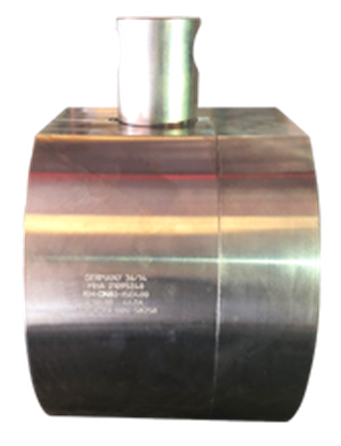

Round-bodied isolation valves with the ISO flange face machined straight into the body. For the large hydraulic lines where SAE flanges have run out of size: the range continues to DN200, and the flange pattern sets both the pressure capability and the bolt spacing.
State bore, flange pattern, working pressure, material and accessories — quotes within 2 working hours.
| Series | MHA Zentgraf KH-ISO |
|---|---|
| Patterns | ISO250 (ISO 6164-1) · ISO400 (ISO 6164-2) · ISO320 |
| Range | DN13–DN200 — 1/2″ to 8″ |
| Pressure | 100–400 bar — by pattern & size |
| Body | Steel or stainless — same PN |
| Seats | POM — this is what limits the temperature |
| Temperature | −10…+100 °C (every code) |
| Bolting | 4×M8 up to 8×M36 |
Pressure, dimension, bolt-circle and weight tables per size are on this page, as printed in the catalogue.
| At a glance | ISO250 | ISO400 | ISO320 |
|---|---|---|---|
| Standard | ISO 6164-1 | ISO 6164-2 | Not 6164 |
| Range | DN13–63 | DN13–80 | DN15–200 |
| Max | 350 bar | 400 bar | 350 bar |
| Bolting | 4×M8–M20 | 4×M8–M30 | 4×M10–8×M36 |
| Pattern | Standard | Range | Valve PN | Bolting |
|---|---|---|---|---|
| ISO250 | ISO 6164-1 | DN13–DN63 | 350 → 250 bar | 4×M8–M20 |
| ISO400 | ISO 6164-2 | DN13–DN80 | 400 bar* | 4×M8–M30 |
| ISO320 | Not ISO 6164 | DN15–DN200 | 350 bar* | 4×M10–8×M36 |
⚠ ISO320 is not part of ISO 6164 — MHA states so itself. It is a manufacturer's pattern, and it is the only one that continues to DN200. Do not assume it will bolt to an ISO 6164 face. *With the exceptions listed in the pressure table below.
Pressure by size, per pattern
| Pattern | Size | Valve pressure |
|---|---|---|
| ISO250 ISO 6164-1 | DN13 | 350 bar |
| DN19 | 350 bar | |
| DN25 | 315 bar | |
| DN32–DN63 | 250 bar | |
| ISO400 ISO 6164-2 | DN13–DN63 | 400 bar |
| DN70 | 315 bar | |
| DN80 (PN100) | 100 bar | |
| DN80 (PN400) | 400 bar | |
| ISO320 | DN15–DN200 | 350 bar |
| DN80 (PN100) | 100 bar |
The pattern name is not the valve rating. On the ISO250 face the valve is 350 bar at DN13–DN19 and 315 bar at DN25 — the 250 figure only applies from DN32 up. And note the two DN80 valves on the ISO400 pattern: one PN100, one PN400, same bolt circle. State the PN on the PO.
| Code | Sizes | Body / ball | Stem | Seats | O-rings | Temp |
|---|---|---|---|---|---|---|
| 212A | DN15–50 | Steel | Steel | POM | NBR | −10…+100 °C |
| 2128 | DN15–50 | Steel | Steel | POM | FPM (Viton) | −10…+100 °C |
| 282A | DN65–200 | Steel | Duplex | POM | NBR | −10…+100 °C |
| 2828 | DN65–200 | Steel | Duplex | POM | FPM (Viton) | −10…+100 °C |
| 442A | All | Stainless | Stainless | POM | NBR | −10…+100 °C |
| 4428 | All | Stainless | Stainless | POM | FPM (Viton) | −10…+100 °C |
282A and 2828 are not stainless — they are steel. They are the large-bore codes whose stem becomes duplex. The stainless codes are 442A and 4428, and both carry exactly the same PN and dimensions as the steel codes at every size — only the order numbers differ. (That is the opposite of the threaded MHA ball valves, where SS316 derates.) The temperature is −10…+100 °C on every code — the limit is the POM seat, not the metal.
| Type | L (mm) | D (mm) | H (mm) | K (mm) | SW | Lever |
|---|---|---|---|---|---|---|
| DN13 | 85 | 78 | 83 | 160 | 12 | Al |
| DN19 | 88 | 119 | 110 | 200 | 14 | Zn |
| DN25 | 88 | 126 | 117 | 200 | 14 | Zn |
| DN32 | 105 | 145 | 158 | 320 | 17 | Al |
| DN38 | 110 | 165 | 178 | 320 | 17 | Al |
| DN51 | 116–123 | 198 | 210 | 320 | 17 | Al |
| DN56 | 123 | 198 | 210 | 320 | 17 | Al |
| DN63 | 150 | 208–224 | 270–286 | 600 | 16 | Steel |
| DN70 | 150 | 224 | 286 | 600 | 16 | Steel |
| DN80 | 140–170 | 228–258 | 293–315 | 600 | 19 | Steel |
L = face-to-face length · D = body diameter · H = height to the stem boss · K = lever length · SW = stem spanner size. Check K before ordering: the lever runs from 160 mm at DN13 to 600 mm from DN63 up, and it has to sweep a quarter circle clear of structure.
ISO250 pattern
| Type | Bore | Circle (mm) | Bolting | Weight |
|---|---|---|---|---|
| DN13 | 15 | 42* | 4×M8 | 2.90 kg |
| DN19 | 20 | 50 | 4×M8 | 6.80 kg |
| DN25 | 25 | 62 | 4×M10 | 7.20 kg |
| DN32 | 32 | 73 | 4×M12 | 12.50 kg |
| DN38 | 38 | 85 | 4×M16 | 16.60 kg |
| DN51 | 48 | 98 | 4×M16 | 24.90 kg |
| DN56 | 48 | 118 | 4×M20 | 26.60 kg |
| DN63 | 63 | 145 | 4×M20 | 36.90 kg |
ISO400 pattern
| Type | Bore | Circle (mm) | Bolting | Weight |
|---|---|---|---|---|
| DN13 | 15 | 42* | 4×M8 | 2.90 kg |
| DN19 | 20 | 50 | 4×M8 | 6.80 kg |
| DN25 | 25 | 62 | 4×M10 | 7.20 kg |
| DN32 | 32 | 73 | 4×M12 | 12.50 kg |
| DN38 | 38 | 85 | 4×M16 | 16.60 kg |
| DN51 | 48 | 98 | 4×M16 | 24.90 kg |
| DN56 | 48 | 118 | 4×M20 | 26.60 kg |
| DN63 | 65 | 145 | 4×M24 | 42.53 kg |
| DN70 | 65 | 160 | 4×M24 | 43.00 kg |
| DN80 (PN100) | 76 | 175 | 4×M30 | 51.00 kg |
| DN80 (PN400) | 76 | 175 | 4×M30 | 63.00 kg |
ISO320 pattern
| Type | Circle (mm) | Bolting | Weight |
|---|---|---|---|
| DN15 | 54 | 4×M10 | On request |
| DN20 | 64 | 4×M12 | 6.80 kg |
| DN25 | 72 | 4×M12 | 7.20 kg |
| DN32 | 80 | 4×M16 | 12.50 kg |
| DN40 | 98 | 4×M16 | 16.60 kg |
| DN50 | 118 | 4×M20 | 24.90 kg |
| DN65 | 145 | 4×M24 | 36.00 kg |
| DN80 (PN100) | 175 | 4×M30 | 34.26 kg |
| DN100 | 200 | 8×M24 | 70.00 kg |
| DN125 | 245 | 8×M30 | 209.00 kg |
| DN150 | 245 | 8×M30 | 225.00 kg |
| DN200 | 315 | 8×M36 | 395.00 kg |
*The DN13 face is rotated 45°. Note the jump in weight: from 70 kg at DN100 to 209 kg at DN125, then 395 kg at DN200 — plan the lifting gear and pipe supports at design stage, not on installation day.
| Type | Valve bore (LW) | ISO250 flange | ISO400 flange | Bore loss |
|---|---|---|---|---|
| DN13 | 15 | 15 | 14 | 1 mm |
| DN19 | 20 | 20 | 18 | 2 mm |
| DN25 | 25 | 25 | 22 | 3 mm |
| DN32 | 32 | 32 | 29 | 3 mm |
| DN38 | 38 | 38 | 35 | 3 mm |
| DN51 | 48 | 47 | 43 | 4 mm |
| DN56 | 48 | 58 | 53 | 5 mm |
| DN63 | 63–65 | 70 | 58 | 12 mm |
Going up to ISO400 does not add flow — it narrows it. The valve bore is much the same, but the flange bore is smaller on the ISO400 face: the gap widens from 1 mm at DN13 to 12 mm at DN63. Going up a class buys pressure capability, not capacity.
Padlock open or shut — for work isolation.
Powered operation — state medium, temperature and pressure so it is sized right.
Threaded holes in the body so the valve is supported, not hung off the pipe.
Electrical open/shut confirmation back to the panel.
A positive lever stop — resists vibration creep.
Several accessories integrated into one valve.
⚠ All are listed by MHA as “on request” — set at factory stage and not retrofittable. Decide them at enquiry stage: a 225 kg DN150 is not something you want to ship back. And from DN63 up: the lever must be fixed centrally during operation — in case of vibration the handle may otherwise operate the valve by itself.
Full dimensions, bolt-hole spacings and part numbers are in the catalogue, as printed; stock and price are not — send the list and we confirm both.
DN13–DN200, or the inch equivalent.
ISO250, ISO400 or ISO320 — this sets the bolt holes.
Your system figure, not the pattern name.
Steel or stainless; NBR or Viton O-rings.
Locking, actuator, switch, detent — they have to be decided now.
Or skip all of it: send a photo of the body marking and the flange face with a rule laid across the bolt-hole centres on WhatsApp — we read the pattern from that and reply within 2 working hours.
Not necessarily. On the ISO250 face the valve is rated 350 bar at DN13 and DN19, 315 bar at DN25, and 250 bar only from DN32 up. The pattern name is not the valve's rating.
KH-DN80-ISO400 (PN100) is rated 100 bar and weighs 51 kg; KH-DN80-ISO400 (PN400) is rated 400 bar and weighs 63 kg. Same bolt circle and bolting, different duty — and the 12 kg difference is body wall metal. State the PN on the PO, not just “DN80-ISO400”.
No. 442A and 4428 carry exactly the same PN and dimensions as the steel codes at every size — only the order numbers differ. That is the opposite of the threaded MHA ball valves, where SS316 derates.
No — they are steel. They are the large-bore steel codes (DN65–DN200) whose stem becomes duplex. The stainless codes are 442A and 4428.
Torque. The force needed to break a ball away from its seats rises with the square of the bore and with the pressure behind it. Duplex stainless has roughly double the yield strength of plain steel, so MHA uses it from DN65 up.
No. The valve bore is much the same, but the flange bore is smaller on the ISO400 face — at DN63 the difference is 12 mm. Going up a class buys pressure capability, not flow.
No. A ball valve is an isolator: fully open or fully shut. Held part open, the flow accelerates past the edge of the ball and erodes both the ball and the downstream seat. Use a needle valve for regulation.
The lever runs from 160 mm at DN13 to 600 mm from DN63 up, and it has to sweep a quarter circle clear of structure. Check the space before ordering, not after the valve arrives.
“The lever must be fixed centrally during operation. In case of vibration the handle may otherwise operate the valve by itself.” And part-open is the condition that ruins a seat.
No. Locking devices, actuators, mounting holes, position switches, detent and combinations are all listed by MHA as “on request” — decided at factory stage, not retrofittable. Decide them at enquiry stage: a 225 kg DN150 is not something you want to ship back.
−10 °C to +100 °C on every material code — steel and stainless alike. The limit is the POM seat, not the metal. For colder or hotter duty, talk to us before the PO.
Yes — we hold this range in our regional warehouses in Singapore and Malaysia, out within 24 hours of your PO; the largest sizes are quoted with a lead time. Quotes back within 2 working hours.
Related: SAE flange end ball valves · threaded hydraulic ball valves · needle valves · bonded seals · retain rings · about the MHA Zentgraf brand · all high pressure valves · baca halaman ini dalam Bahasa Indonesia
