A flanged quarter-turn ball valve with PN10/16 flanges, 3/4″ to 6″ (DN20 to DN150), in stainless steel SS316. Designed and manufactured to EN 1983, flange ends to EN 1092-1. Shell tested at 2.4 MPa, for service at −29 °C to 150 °C.
State the size and the flange standard on your pipework — quotes within 2 working hours.
| Flange standard | PN10/16 — must match your pipework |
|---|---|
| Range | 1/2″ to 6″ (DN20–DN150) |
| Design | EN 1983 |
| Face-to-face | EN 558 & S15 |
| Flange ends | EN 1092-1 |
| Body | Stainless steel SS316 / CF8M |
| Trim | SS316 |
| Max temperature | −29 °C to 150 °C |
The eleven-size dimension table with part numbers, the 17-item bill of materials and the test pressures are all on this page, as printed in the catalogue.
Built to EN 1983, with PN10/16 flanges.
A quarter-turn ball valve that bolts into the line through PN10/16 flanges, in 3/4″ to 6″ (DN20 to DN150). The body is stainless steel SS316 and it is designed and manufactured to EN 1983, with face-to-face dimensions to EN 558 & S15 and flange ends to EN 1092-1.
On a flanged valve the standard is not paperwork — it is the dimensions. The PN10/16 drilling has to match the flange it bolts to, and the face-to-face length has to match the gap in the pipe run. Both are in the size table. The other three flange standards we stock will not bolt to this one. All six compared.
Body, ball and stem in SS316 (with CF8M, the cast equivalent, where the part is cast). Everything wetted is SS316 or PTFE.
Seat, gasket, O-ring and packing are all PTFE — which is what sets the 150 °C ceiling, not the stainless.
The two cast-steel variants fit an SS304 anti-static device; this parts list does not include one. If you are on hydrocarbon duty and need the ball bonded to the body, tell us and we will confirm with the factory.
Studs, nuts and screws in SS304 — more corrosion-resistant than the A193 B7 bolting on cast steel, and lower strength.
DN20 to DN150. The dimension table carries full dimensions and weights for every size, and 5″ and 6″ are available.
Shell, seat and gas tightness, for service at −29 °C to 150 °C. Those are factory proof tests, not working pressures — do not design to them.
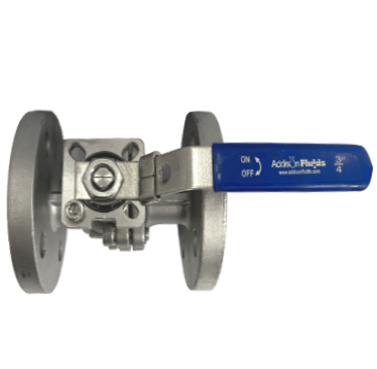
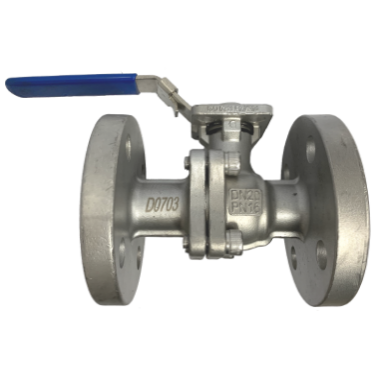
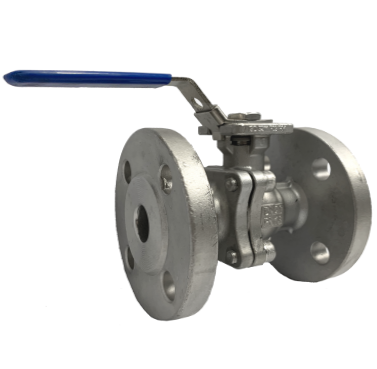
All photographs of the stocked item, not renders.
All stainless. Body, ball and stem in SS316 — there is no carbon steel anywhere in the pressure boundary, which is the whole reason to choose this over the cast steel version.
Raised face and bolt holes. This is the face that has to match your pipework — bolt circle D1 and hole pattern N-M in the size table.
Bolted bonnet. The stem runs up through the bonnet with PTFE packing around it — items 11 and 12 on the parts list.
Everything that goes on a purchase order.
| Item | Detail |
|---|---|
| Rentang ukuran | 3/4″ sampai 6″ (DN20 sampai DN150) |
| Standar flensa | PN10/16 — tidak saling menggantikan dengan alternatif ANSI, JIS atau PN |
| Desain dan pembuatan | EN 1983 |
| Dimensi face-to-face | EN 558 & S15 |
| Ujung flensa | EN 1092-1 |
| Material bodi | Stainless steel SS316 |
| Trim | SS316 |
| Seat | PTFE — yang menetapkan batas suhunya |
| Shell test | 2,4 MPa |
| Seat test | — |
| Uji gas tightness | 0,6 MPa |
| Suhu kerja maksimum | −29 °C sampai 150 °C |
| Operasi | Quarter turn, tuas manual |
| Stok | Gudang Singapura & Malaysia — keluar dalam 24 jam |
Ten sizes, dimensions in millimetres. The two figures that decide whether the valve fits are face-to-face L — the gap it needs in the pipe run — and the bolt circle D1 with its hole pattern, which has to match the mating flange. Letters follow the manufacturer's drawing; where a letter is ambiguous we have left it as published rather than guess at it.
| Size | Part no | DN | Bore d | Bore d1 | Flange OD D | Bolt circle D1 | Raised face D2 | Face-to-face L | Flange thk C | Bolts N-d2 | f |
|---|---|---|---|---|---|---|---|---|---|---|---|
| 3/4″ | VL-S-B2-F-PN16-12 | 20 | 20 | 19 | 105 | 75 | 58 | 120 | 18 | 4-14 | 2 |
| 1″ | VL-S-B2-F-PN16-16 | 25 | 25 | 24 | 115 | 85 | 68 | 125 | 18 | 4-14 | 2 |
| 1¼″ | VL-S-B2-F-PN16-20 | 32 | 32 | 31 | 140 | 100 | 78 | 130 | 18 | 4-18 | 2 |
| 1½″ | VL-S-B2-F-PN16-24 | 38 | 40 | 39 | 150 | 110 | 88 | 140 | 18 | 4-18 | 2 |
| 2″ | VL-S-B2-F-PN16-32 | 50 | 50 | 49 | 165 | 125 | 102 | 150 | 18 | 4-18 | 2 |
| 2½″ | VL-S-B2-F-PN16-40 | 65 | 65 | 64 | 185 | 145 | 122 | 170 | 18 | 4-18 | 2 |
| 3″ | VL-S-B2-F-PN16-48 | 78 | 80 | 79 | 200 | 160 | 138 | 180 | 20 | 8-18 | 2 |
| 4″ | VL-S-B2-F-PN16-64 | 100 | 100 | 99 | 220 | 180 | 158 | 190 | 20 | 8-18 | 2 |
| 5″ | VL-S-B2-F-PN16-80 | 125 | 125 | 125 | 250 | 210 | 188 | 325 | 22 | 8-18 | 2 |
| 6″ | VL-S-B2-F-PN16-96 | 150 | 150 | 150 | 285 | 240 | 212 | 350 | 22 | 8-22 | 2 |
Raised face height f is 2 mm at every size, as printed. Note this table publishes two bore figures — d the nominal bore and d1 the actual bore through the ball, which is 1 mm smaller up to 4″ and then equal at 5″ and 6″.
It is the one dimension that cannot be worked around. PN10/16 will not bolt to any of the other three standards we stock, whatever the pressure rating says.
Especially on a replacement — and measure the valve coming out rather than trusting a drawing.
The PN10/16 table prints only the flange, face-to-face and bore dimensions — there is no height H or handle W column. The lever still needs a clear 90° sweep; ask us to measure a stocked unit if space is tight.
This table carries no weight column. For support or shipping calculations, ask us and we will weigh a stocked unit.
190 mm at 4″ then 325 mm at 5″ and 350 mm at 6″. Measure the gap in your run before ordering either of the top two sizes.
d = DN from 3/4″ to 6″, except 1½″ which is DN38 with a 40 mm bore, and 3″ which is DN78 with an 80 mm bore — as printed.
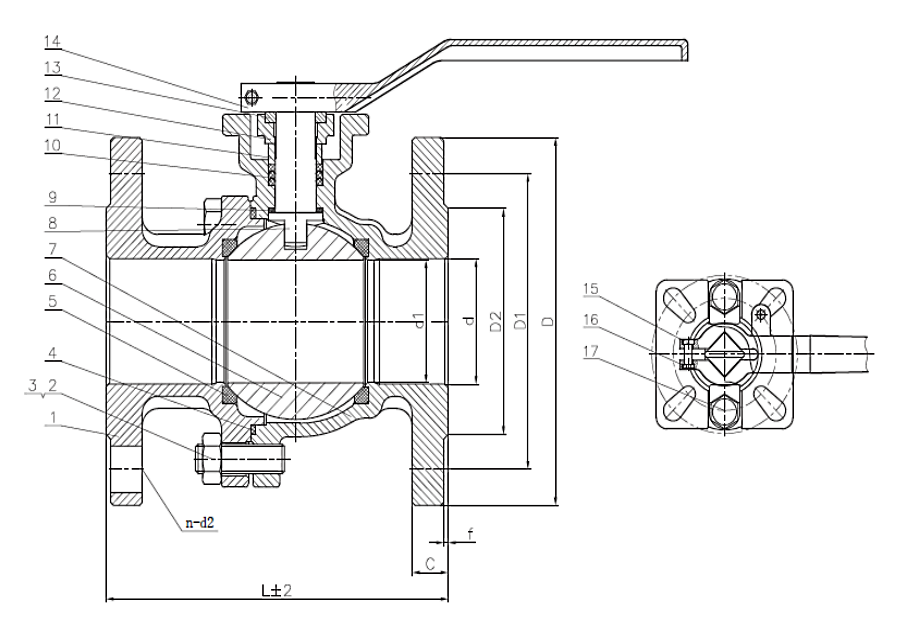
Numbered to match the parts list below. The section shows the split body bolted at the centre, the ball and PTFE seats, and the flange dimensions the size table lists.
With the manufacturer's own item numbers.
| Item | Value |
|---|---|
| Nominal pressure | 1.6 MPa (PN16) |
| Shell test | 2.4 MPa |
| Seat test | — not separately published |
| Gas test | 0.6 MPa |
| Max working temperature | −29 °C to 150 °C |
They are the callout numbers from the sectional drawing, not a tidied 1–14 list. We have left them exactly as published so a spares order matches the drawing.
That is why this valve tops out at −29 °C to 150 °C whatever the body is made of.
If you need to know what touches your fluid, the whole list is above.
Factory proof tests. Not working pressures.
| Item | Value |
|---|---|
| Tekanan nominal | PN16 |
| Shell test | 2,4 MPa |
| Tightness test | — |
| Gas-tightness test | 0,6 MPa |
| Suhu kerja maks. | −29 °C sampai 150 °C |
They are manufacturing proof tests well above the working rating — the shell test proves the casting, the seat test proves the seal, and the gas test proves it holds low-pressure gas. The valve is not intended to operate there.
The one figure that does not change with class or material.
Stainless steel SS316 would take far more; the seat is what stops it. All six variants compared.
Flange standard first, then material.
All six, side by side: the comparison table.
Dimensions and part numbers are in the catalogue, as printed; stock and price are not — send the list and we confirm both.
No. An PN10/16 flange will not mate with JIS 10K or PN10/16, even though the nominal pressures are close. The bolt circle, hole count and hole diameter all differ. Check the existing flange before ordering.
Body, ball and stem in SS316 (with CF8M, the cast equivalent, where the part is cast). Seat, gasket, O-ring and packing are all PTFE. Fasteners are SS304. Everything wetted is SS316 or PTFE.
Not listed on this variant. The two cast-steel variants fit an SS304 anti-static device; this parts list does not include one. If you are on hydrocarbon duty and need the ball bonded to the body, tell us and we will confirm with the factory.
PN16 means a nominal pressure of 1.6 MPa — 16 bar. This range is published as PN10/16: the flange drilling follows EN 1092-1 and the dimensions are the same for both classes at these sizes, so one valve serves PN10 and PN16 pipework. The nominal rating used is 1.6 MPa.
Shell 2.4 MPa and gas tightness 0.6 MPa; the seat test is not separately published. Those are factory proof tests, not working pressures — well above the working rating, and the valve is not intended to operate there.
Because the limit is the PTFE seat, not the body. SS316 would take far more; the seat is what stops it. That applies to all six flange end variants whatever the body is made of.
They are the manufacturer's numbers — the callout numbers from the sectional drawing, not a tidied 1 to 14 list. We have left them exactly as published so a spares order matches the drawing.
1/2″ to 6″ (DN20 to DN150) — ten sizes, including 5″ and 6″. The dimension table carries full dimensions and weights for every size.
Held in our Singapore and Malaysia warehouses, out within 24 hours of your PO; quotes within 2 working hours.
Related: all flange end ball valves · ANSI 300 SS316 for a higher class · flanges · all low pressure valves.